Seriously Funny
Stand-Up as Therapeutic Intervention
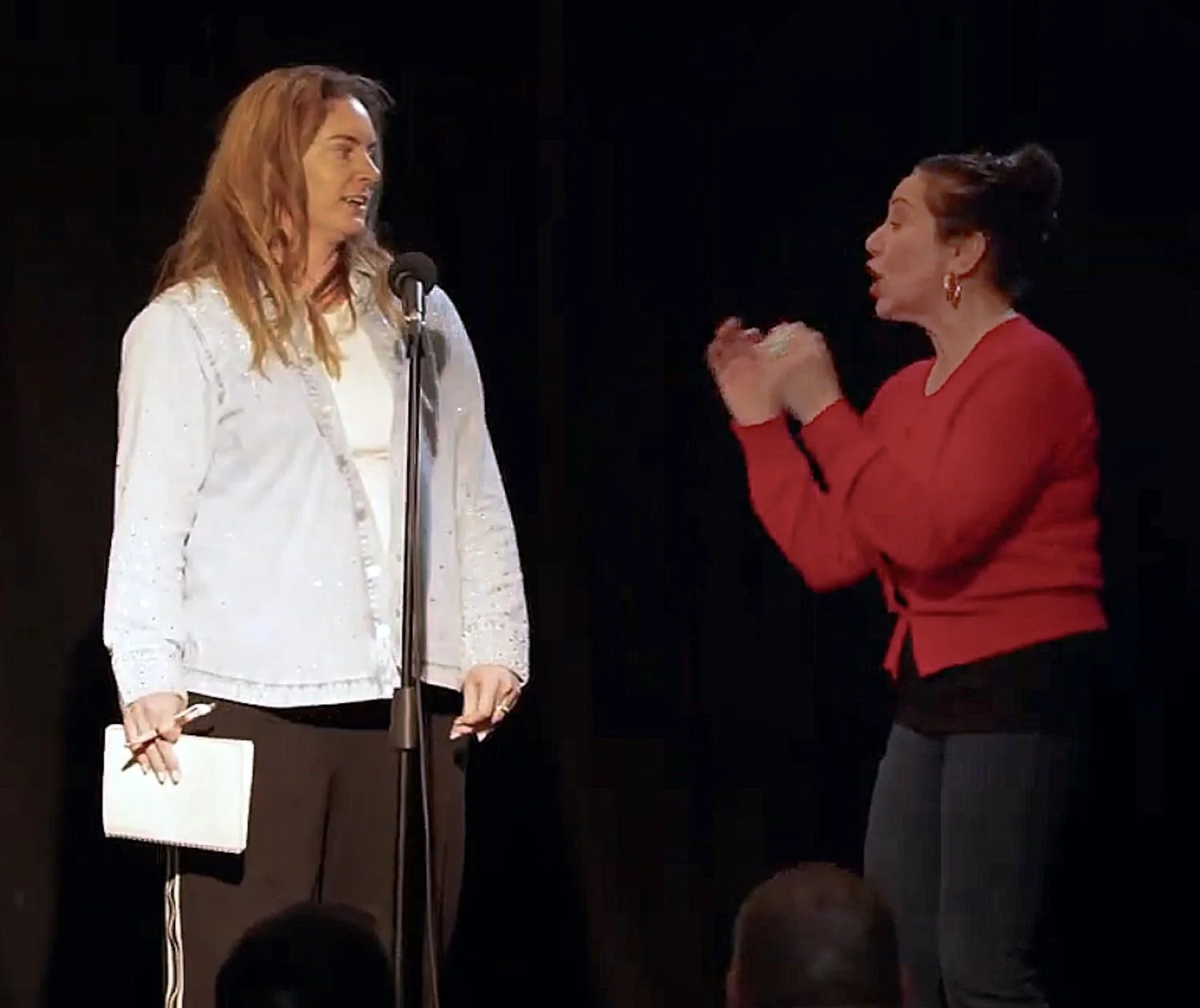
Stand-Up Comedy can help us sift through the unbearable, deflect our anger, and find our authentic ‘funny’ self while laughing at the fact that we're just farting monkeys.
Participants are guided through a one-day workshop where they write and craft their individual stand-up comedy routines, culminating with a “graduation” show in front of an audience that night. Rachel helps participants transform their challenges into comedy gold, using humour as a tool for resilience. Personal stories are revealed and re-focused through a comedy lens. The participants are launched on a path of self-discovery where they are transformed by the realisation that now they are the storyteller, not the story.
Read the full article in The Age.
Rachel works with small groups of 8-12 people who have suffered adverse life experiences. Over 6 hours, they develop their stories into a five-minute comedy routine. The workshop is designed to leverage the craft of storytelling and stand-up comedy. Participants are guided through the tools, techniques and processes of identifying material, developing a narrative and connecting with an audience, translating their experiences and stories into meaningful, funny performances. Participation can challenge the way they tell their story, their view of the world, life experiences and events. The small number of participants offers an opportunity for everyone to connect, to see our similarities and value our differences within the context of a purposefully constructed and supportive environment. That evening, those stories come to life as participants perform their Stand-Up routines for a small audience of friends and family.
Participant Feedback
“Helping me sift through all the jumble of imagery in my head and craft it into a chronological story that I could speak aloud without any emotional baggage let me step outside of the story, and see it as if I was an audience member instead of on stage talking about myself… The process managed to do what counselling never did; allow me to unpack the facts and see them for what they are. They’re just a story in my head now, not a frightening series of movie reels that play unbidden at random moments. I’m so much stronger for it.”
“Never in my life did I imagine performing a stand-up routine in front of an audience after just a six-hour workshop!... The workshop not only gave me the confidence to speak in front of people it was an unforgettable, empowering experience!”

OUTCOMES
VALIDATING, EMPOWERING, HEALING, MORE SNORTING LAUGHTER THAN TWO BABY PIGS IN A MUD PUDDLE.
Participants:
create their own narrative
learn a new skill
reinforces their sense of self-efficacy
build confidence in their abilities
assert social agency on their own terms.
WHY STAND-UP?
Humour fosters resilience and can help you shift from being reactive to proactive, it helps you to recognise that things can shift, and we have the ability to make a positive impact on whatever it is we’re facing in our lives. Investigating the relationship between humour, coping with stress, and positive emotion, Martin, Kuiper, Olinger, and Dance (1993) found that higher levels of humour are associated with “more positive cognitive appraisals in the face of stress and greater positive affect in response to both positive and negative life events.”
INTERNATIONAL RESEARCH
Key Findings from Armed Services Arts Partnership (ASAP) USA
Stand-Up Comedians working with returned soldiers with PTSD
ASAP’s programs improve veterans’ well-being in a statistically significant and sustained manner. ASAP measured this impact by examining increases across the following domains:
Confidence & Self-Esteem
Participants experienced significant increases in confidence and self- esteem, a result driven by their mastery of new skills, accomplishing the difficult and at times, scary feat of performing in shows, and forging new social bonds through ASAP’s programs.
Skill Development & Translation
Participants experienced significant improvements in their direct artistic skills. But the effects of these skills extend beyond the classroom walls: participants are able to translate them to enhance other aspects of their lives, including family and peer relationships, and professional and academic performance.
Resilience
Engaging in ASAP classes sustainably enhanced participants’ overall resilience, driven by increases in commitment and control. Participants’ ability to see life as meaningful and interesting and something over which they have agency, is critical to facilitating improved quality of life.
Belonging & Social Support
Participants experienced a heightened sense of social support and belonging, both inside the classroom with their classmates and instructors, and outside the classroom with their broader community. This sense of belonging and the inclusive sense of community ASAP facilitates directly drives participants to successfully complete the organisation’s classes.
Integration of Self
Participants repeatedly characterised their participation in an ASAP class as a “healing”
experience. Researchers determined this was a euphemism for how participants learned to accept, honour, and integrate their life experiences as part of themselves to promote their wellbeing.